How to Bet on Greyhound Racing in the UK: The Complete Guide
 Available in US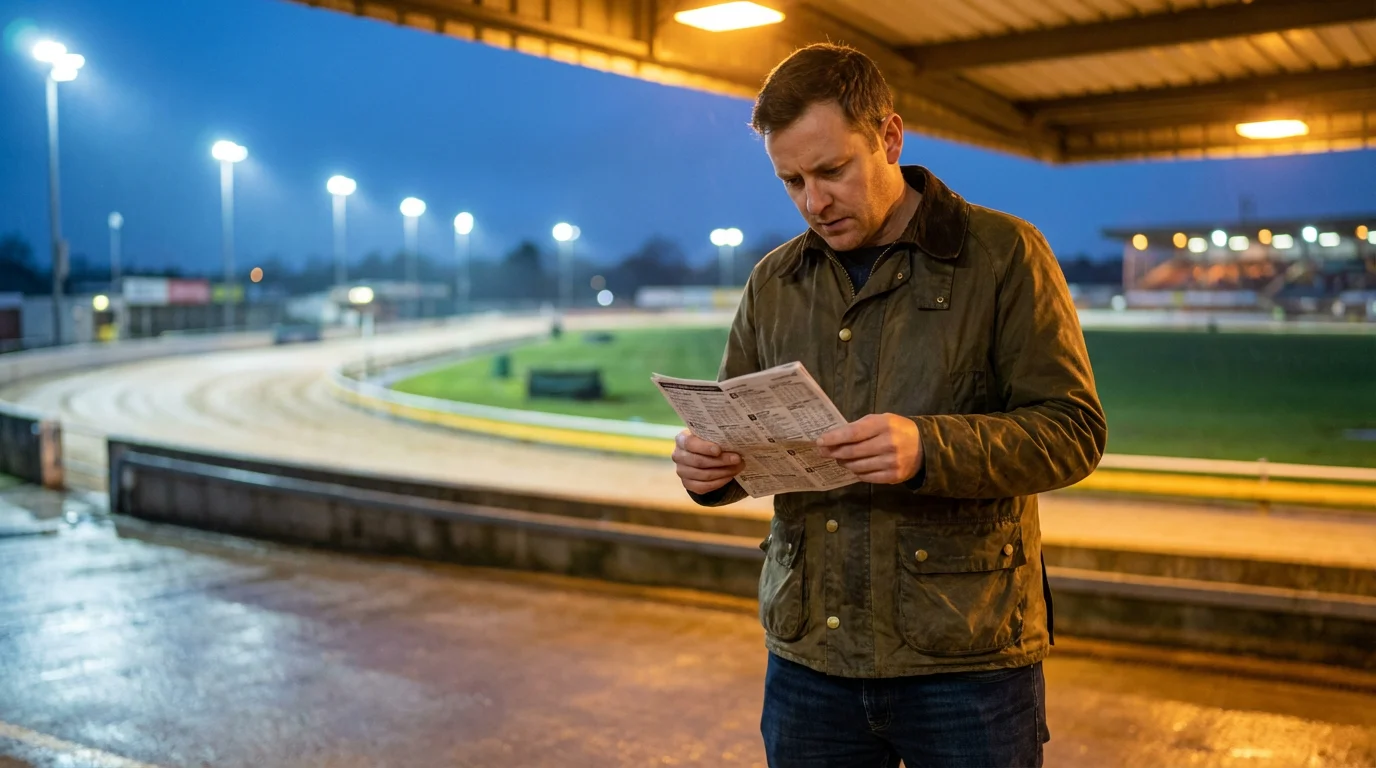
The 90-Second Sport That Rewards Preparation
Greyhound racing compresses an entire betting experience into under two minutes. From the moment six dogs settle into their traps to the instant the first nose crosses the finish line, a standard race at a UK track lasts roughly ninety seconds. That brevity is part of the appeal. It is also the reason so many casual punters lose money — they treat it like a lottery when it is closer to a puzzle.
The structure of a greyhound meeting rewards anyone willing to do even modest preparation. Six runners, no jockeys, no tactical mid-race decisions by a human. Every dog runs its own race, dictated by running style, trap position, fitness, and the geometry of the track. That makes form more predictive here than in many other sports, provided you know where to look and what to ignore.
Greyhound betting in Britain sits at a peculiar crossroads in 2026. The sport has lost tracks — Crayford, Wimbledon, and Swindon are all gone — yet betting turnover on dogs remains substantial, fuelled largely by the move to online and the availability of live streaming through bookmaker platforms. According to the Gambling Commission, greyhound racing generated close to eight hundred million pounds in betting shop turnover during the 2023-24 reporting period. The number has been falling, but it is still far from negligible. What has changed is where and how people bet. The trackside tote queue is no longer the default. Most greyhound punters today place their bets through a phone, often while watching a stream with a thirty-second delay. That shift changes the dynamic. You have more data at your fingertips than a trackside punter ever did — racecards, form databases, trap statistics, sectional times — but you also face a market that moves fast and reacts to every piece of information you can see.
This guide is built for that reality. It covers the legal framework, the mechanics of odds, every bet type available in UK greyhound racing, and the practical question of where to place those bets — on course, in a shop, or online. It also addresses something most betting guides gloss over: how to manage your money so that a losing night does not become a losing month. If you have never placed a bet on a greyhound race, everything here is written to take you from zero to competent. If you have been betting for years but never sat down to formalise what you do, the sections on staking and value will be worth your time.
There is no secret system. Greyhound racing, like any form of gambling, involves risk. But the six-dog field and the wealth of public data create opportunities for informed bettors that simply do not exist in many other markets. The rest of this guide explains how to use them.
Find more betting guides at crayforddogsresults.
Is Greyhound Betting Legal in the UK?
If you are eighteen or over and using a UKGC-licensed operator, it is legal. That single sentence covers the essentials, but the regulatory framework behind it is worth understanding because it directly affects your experience as a bettor.
Greyhound racing in Great Britain is regulated by the Greyhound Board of Great Britain, commonly abbreviated to GBGB. The GBGB oversees licensed tracks, enforces the Rules of Racing, and manages the integrity of the sport — from drug testing to kennel inspections. It is not, however, the body that regulates betting. That responsibility sits with the UK Gambling Commission, established under the Gambling Act 2005. The UKGC licenses and monitors every bookmaker, betting exchange, and tote operator that legally accepts wagers from UK customers. Any operator you use should display its UKGC licence number prominently, usually in the footer of its website or app.
The distinction matters because it defines your protections. A UKGC-licensed bookmaker is required to keep customer funds segregated, offer self-exclusion tools, and participate in the GAMSTOP scheme, which allows you to block yourself from all licensed operators simultaneously. An unlicensed operator offers none of those safeguards, and using one means you have no recourse if something goes wrong. In practical terms, every major bookmaker available to UK customers — high street chains and online-only brands alike — holds a UKGC licence. If you are using a well-known name, you are almost certainly on the right side of the line.
GBGB-licensed tracks are the venues where regulated greyhound racing takes place. As of early 2026, there are nineteen such tracks across England and Wales, down from twenty-one just two years earlier. Independent or “flapping” tracks — venues that operated outside GBGB regulation — have all but disappeared, with the last one closing in early 2025. The practical implication is that virtually all greyhound racing you can bet on through a licensed UK bookmaker takes place under GBGB governance, which means standardised rules, veterinary oversight, and published form data.
One final point: the minimum legal age for placing a bet in the UK is eighteen, whether online, in a betting shop, or at a track. There is no grey area. If you are at the track with someone under eighteen, they can watch the racing but cannot place bets or enter betting areas. Online operators are required to verify age before allowing any wager.
Understanding Greyhound Odds
Odds are not predictions. They are the market’s collective opinion, expressed as a price, about how likely a dog is to win. Understanding this distinction is the first step to betting with any kind of edge, because it means the odds can be wrong — and when they are wrong, that is where value lives.
In greyhound racing, odds are set by two mechanisms. Bookmakers set fixed odds based on their own assessment of each dog’s chance, adjusted to ensure a profit margin. The tote (or totalisator) works differently: it pools all bets together and divides the pot among winning ticket holders after a deduction. The two systems can produce different payouts for the same race, which is why experienced punters compare prices before committing.
Fractional vs Decimal vs American
UK bookmakers traditionally display greyhound odds in fractional format. A dog at 4/1 returns four pounds of profit for every one pound staked, plus your stake back — so a five-pound bet returns twenty-five pounds. A dog at 2/1 returns two pounds of profit per pound staked. Odds-on prices, like 4/6, mean you need to stake six pounds to make four pounds of profit, reflecting a dog the market considers more likely than not to win.
Decimal odds express the same thing more cleanly. The decimal price is the total return per unit staked, including your stake. So 4/1 fractional becomes 5.0 decimal. 2/1 becomes 3.0. Evens (1/1) becomes 2.0. The conversion is straightforward: divide the first number by the second and add one. Most online bookmakers let you toggle between formats in the settings, and many bettors who grew up with fractional odds have quietly switched to decimal because the maths is simpler — you just multiply your stake by the decimal price to get the total return.
American odds exist but are rarely used in UK greyhound betting. Positive American odds show profit on a one-hundred-pound stake; negative odds show how much you need to stake to profit one hundred pounds. Unless you are using a US-facing exchange, you can safely ignore this format for British dogs.
Behind every price sits an implied probability. A dog at 4/1 (5.0 decimal) has an implied probability of twenty per cent. The formula is simple: divide one by the decimal odds. At 2/1 (3.0), the implied probability is thirty-three per cent. At evens (2.0), it is fifty per cent. In a perfectly efficient market, the implied probabilities of all six dogs in a race would sum to one hundred per cent. In practice, they sum to something higher — typically between 115% and 130% — because the bookmaker builds in an overround, which is their margin. Understanding overround helps you evaluate whether you are getting a fair price.
Starting Price and How It’s Set
The Starting Price, universally abbreviated to SP, is the official price of a dog at the moment the traps open. It is determined by an independent SP reporter at the track who records the prices offered by on-course bookmakers and calculates a representative price. If you do not take a fixed price before the race, your bet is settled at SP.
SP matters because greyhound markets can move significantly in the minutes before a race. A dog might open at 5/1 in the morning and drift to 8/1 by trap time — or shorten to 3/1 if money pours in. If you took 5/1 early, that is your price regardless of what happens later. If you left it to SP, you get whatever the market settled on. This creates a genuine tactical decision, and it is one of the reasons the Best Odds Guaranteed promotion — covered later in this guide — is so important for greyhound bettors.
One detail that catches newcomers: SP is not the same as the tote dividend. The tote pays based on pool returns, which are calculated independently of bookmaker prices. In the same race, the SP might be 4/1 while the tote dividend works out at 5.20 per unit. They are two different mechanisms, and neither is inherently better — it depends on the race and the market.
Every Bet Type Explained
Build your betting toolkit from the ground up. Greyhound racing offers a range of bet types, from the straightforward win bet to the more demanding tricast, and each serves a different purpose depending on your confidence level and appetite for risk. The temptation is to jump straight to the exotic bets with their larger payouts, but the structure of each bet type matters as much as the potential return.
Single Bets: Win, Place, Each-Way
A win bet is the simplest wager in greyhound racing. You pick a dog, and if it finishes first, you collect. The payout is determined by the odds at the time you placed the bet (or at SP if you did not take a price). If your dog finishes second, third, or anywhere else, you lose your stake. There is no partial return.
A place bet pays out if your selection finishes in the top two. Because the conditions for winning are less demanding, the odds are lower — typically a quarter of the win odds in a standard six-dog race. So a dog at 8/1 for the win would pay 2/1 for a place. Place betting is useful when you fancy a dog to run well but lack confidence it will win outright, particularly in races where the favourite is strong but not unbeatable.
An each-way bet combines both. It is two bets in one: a win bet and a place bet, at equal stakes. If you place a five-pound each-way bet, your total outlay is ten pounds — five on the win, five on the place. If the dog wins, you collect on both. If it places but does not win, you collect only the place portion. The each-way bet is the bread and butter of many greyhound punters because it provides a safety net at a reasonable cost, but it only makes mathematical sense at certain price points. As a rough guideline, each-way betting starts to offer genuine value at around 4/1 and above in a six-runner field. Below that, the place return often barely covers your total stake.
Exotic Bets: Forecast, Tricast, Combination
A straight forecast requires you to predict the first and second dog in the correct order. It is harder to land than a win bet, and the dividends reflect that difficulty — forecast payouts in greyhound racing regularly reach double figures and occasionally much more. The dividend is declared after the race based on pool returns, not on fixed odds, though some bookmakers now offer fixed-odds forecasts.
A reverse forecast covers both possible orders of your two selections. If you pick traps 2 and 5, you win if 2 finishes first and 5 second, or if 5 finishes first and 2 second. The cost is double the unit stake because you are effectively placing two straight forecasts.
A straight tricast asks you to predict the first three dogs home in exact order. The payouts can be substantial — triple-figure dividends are common — but the strike rate is inherently low. A combination tricast covers every possible ordering of your three selections, which means six bets at one unit each. So a one-pound combination tricast costs six pounds. If your three dogs fill the first three positions in any order, you collect the declared tricast dividend. The maths is unforgiving, but a single big tricast win can transform an entire evening’s ledger.
Multiple Bets: Doubles Through Accumulators
A double links two selections in different races. Both must win for the bet to pay out, and the returns from the first winner roll onto the second as the stake. The appeal is amplification: two dogs at 3/1 in a double return 15/1 to your original stake. The risk is equally amplified — one loser and the entire bet is void.
Trebles and four-folds extend the same principle across three or four races. An accumulator, in theory, can link any number of selections, though in greyhound racing most sensible punters cap their accumulators at four legs. The probability of picking five or six consecutive winners at decent prices is vanishingly small, and the bookmaker’s margin compounds with each additional leg.
There are also patent, trixie, yankee, and other full-cover bets that combine singles, doubles, and trebles from a set of selections. These provide partial returns if not all selections win, but the total stake increases quickly. A trixie on three dogs costs four units (three doubles and a treble). A yankee on four dogs costs eleven units. Unless you have strong opinions on multiple races and a bankroll to match, these bets are better understood than regularly used.
Where and How to Place Greyhound Bets
You can bet at the track, in a shop, or from your phone. Each channel has its own rhythm, its own advantages, and its own blind spots.
On-Course Betting: Tote and Track Bookmakers
At a licensed track, you have two options: the tote or on-course bookmakers. The tote operates a pool system. You place your bet at a tote window or terminal, your stake enters a pool with every other bet on that race, and the final payout is calculated after the result by dividing the pool among winning tickets, minus a deduction that typically runs between fifteen and twenty-five per cent depending on the bet type. You will not know your exact return until after the race.
On-course bookmakers, by contrast, offer fixed odds. You see a price, you agree to it, and that is your return if the dog wins. Prices change in the minutes before a race as money comes in, so timing matters. Bookmakers at the track tend to offer slightly different prices from one another, and shopping between them — even briefly — can make a meaningful difference over a night’s racing. The atmosphere of on-course betting is part of the appeal for many racegoers, and there is a tactical satisfaction in taking a price at the right moment that no app can replicate.
Fewer people bet on course than a decade ago. Track closures have reduced the opportunities, and the convenience of online betting has pulled away a generation of punters who might otherwise have learned their trade at the rail. But if you have a track within reach, at least one visit is worth the trip — not for nostalgia, but because watching dogs run live teaches you things about pace, style, and track shape that no screen fully conveys.
Online Bookmakers: What to Look For
Online bookmakers are where the majority of greyhound betting now takes place. The process is straightforward: open an account with a UKGC-licensed operator, deposit funds, navigate to the greyhound section, select a race, and place your bet. Most platforms display racecards, form figures, and recent results alongside the betting market, giving you everything you need in one place.
When choosing where to bet, a few factors matter more than others. Greyhound coverage varies between operators — some offer live streaming of GBGB meetings as standard, while others require a funded account or a placed bet to unlock the stream. Streaming is not a luxury; it is how you learn to read a dog’s body language before a race, spot trouble at the first bend, and confirm whether a result was fair or freakish. Any bookmaker you use regularly should offer it.
Odds competitiveness also varies. The difference between 5/1 and 11/2 on the same dog sounds trivial until you multiply it across a hundred bets over a month. Having accounts with two or three operators and comparing prices before each bet is one of the simplest ways to improve your long-term returns. It requires no extra skill — just a few seconds of comparison. Finally, look for operators that offer Best Odds Guaranteed on greyhounds, which is covered in the next section.
Best Odds Guaranteed and Greyhound Promotions
BOG is the single most valuable promotion for greyhound punters, and it solves a problem that sits at the heart of pre-race betting: the tension between taking a price early and waiting for SP.
Here is how it works. You take a fixed price on a dog before the race — say 5/1. The traps open, the dog wins, and the SP turns out to be 7/1. Without BOG, you are paid at 5/1 because that is the price you accepted. With BOG, the bookmaker pays you at the higher price — 7/1 in this case — automatically. It works in the other direction too, though less visibly: if the SP is 3/1 and you took 5/1, you keep your 5/1. BOG means you always get the better of the two prices.
The impact over time is significant. Greyhound markets are volatile compared to horse racing — prices swing sharply in the final minutes before a race, often on relatively small amounts of money. A dog can open at 6/1 in the morning, trade at 4/1 mid-afternoon, and drift back to 7/1 by trap time. Without BOG, the bettor who took 4/1 is locked in. With BOG, that same bettor would be paid at 7/1 if the SP drifted. It eliminates the worst consequence of taking a price too early, which makes the entire process less stressful and, crucially, more profitable.
Not all bookmakers offer BOG on greyhounds. Among those that do, the terms vary. Some apply it to all UK GBGB races. Others restrict it to certain meetings, specific tracks, or races that start before a certain time. A few exclude ante-post betting or tote-only markets. It pays to read the small print, but as a general rule, any operator that offers BOG on all GBGB greyhound meetings — and there are several — should sit at the top of your list.
Beyond BOG, greyhound-specific promotions tend to be less generous than those offered for horse racing or football. You may find occasional money-back offers on forecast bets when your first selection wins but the forecast does not land, or free bet offers tied to specific meetings. These promotions are worth using when they appear, but they should never drive your betting decisions. A five-pound free bet has value only if you would have made the bet anyway; otherwise, it is just the bookmaker nudging you toward a wager you did not plan for. The only promotion that genuinely changes the maths of greyhound betting on a consistent basis is BOG, and the best approach is simple: make it a non-negotiable requirement for any bookmaker you use regularly.
Staking Plans and Bankroll Management
A strategy without a staking plan is just wishful thinking. You can read form correctly, understand odds, and pick winners at a better-than-average rate, and still lose money if your staking is reckless. Bankroll management is not the exciting part of betting — nobody has ever told a story at the pub about their disciplined two-per-cent stakes — but it is the part that determines whether you are still betting next month or staring at an empty balance.
Start by defining your bankroll. This is money set aside specifically for betting, separate from rent, bills, savings, and every other financial obligation. It is not your bank balance, and it is not whatever happens to be in your account on a Friday evening. Pick a number you can lose entirely without it affecting your life. If that number is fifty pounds, your bankroll is fifty pounds. If it is five hundred, fine. The number itself does not matter as much as the discipline of treating it as a fixed pool.
Once you have a bankroll, the simplest staking plan is level stakes — betting the same amount on every selection regardless of confidence or odds. A common starting point is two per cent of your bankroll per bet. On a five-hundred-pound bankroll, that is ten pounds. On a hundred-pound bankroll, it is two pounds. The percentage keeps your bets proportionate to what you can afford, and it ensures that a bad run — which will happen, because variance in six-dog fields is real — does not wipe you out before the numbers have a chance to work in your favour.
Some bettors prefer a variable staking approach, increasing their bet size on selections they are particularly confident about. This can work, but it introduces a layer of subjectivity that most people overestimate their ability to manage. The temptation to up stakes on a “certainty” is strongest precisely when you have already had a few losers, which is exactly when you should be doing the opposite. If you do use variable stakes, set an upper limit — say, five per cent of your bankroll — and never exceed it regardless of how confident you feel.
Session limits are equally important, particularly for greyhound racing where meetings consist of twelve or more races in quick succession. It is easy to arrive at a meeting with a plan and abandon it by race eight after three consecutive losers. Setting a loss limit for the session — a fixed amount beyond which you stop betting, no exceptions — is the most practical tool for preventing an unlucky night from becoming a damaging one.
A word on chasing losses: do not. The urge to increase stakes on the last race of the evening to recover what you have lost is universal, predictable, and almost always counterproductive. The last race is not statistically different from the first. It does not owe you a winner. The dogs do not know your ledger. If you hit your session limit, close the app or leave the track. There will be another meeting tomorrow.
The Edge You Build Over Time
Nobody masters greyhound betting in a weekend. The knowledge compounds slowly — a better understanding of trap bias at a specific track, a feel for which trainers are in form, an instinct for when odds are too short and when they represent genuine value. None of that comes from reading a single guide, including this one. It comes from placing bets, reviewing results, and being honest about what went wrong and what went right.
The encouraging part is that greyhound racing is one of the most transparent betting mediums available. The fields are small. The form data is public. The variables — track, trap, distance, grade, recent form — are finite and knowable. You are not competing against insider information or algorithmic traders the way you might in horse racing at the highest level. The market is driven largely by casual bettors and recreational punters, which means anyone willing to do consistent analysis has a structural advantage.
That advantage does not guarantee profit. It guarantees only that your decisions are better informed than the average punter’s, and over a large enough sample of bets, better decisions produce better outcomes. The margin may be slim — a few percentage points above breakeven — but it is real, and it is sustainable in a way that gut-feel betting is not.
The practical steps are straightforward. Learn to read a racecard. Understand what form figures, sectional times, and trap statistics actually tell you. Use BOG wherever it is available. Manage your bankroll with the same seriousness you would manage any other budget. And approach each meeting not as a gamble but as a series of small decisions, each one informed by data and constrained by discipline.
Also read our betting strategy for beginners.
Greyhound racing in Britain is smaller than it once was, but the dogs still run six nights a week at tracks from Romford to Newcastle, and the betting markets are open for every race. The sport rewards the prepared. Start with what you have learned here, test it against real results, and build from there.
