Greyhound Trainer Stats: How to Analyse Kennel Performance
The Trainer Is Half the Bet
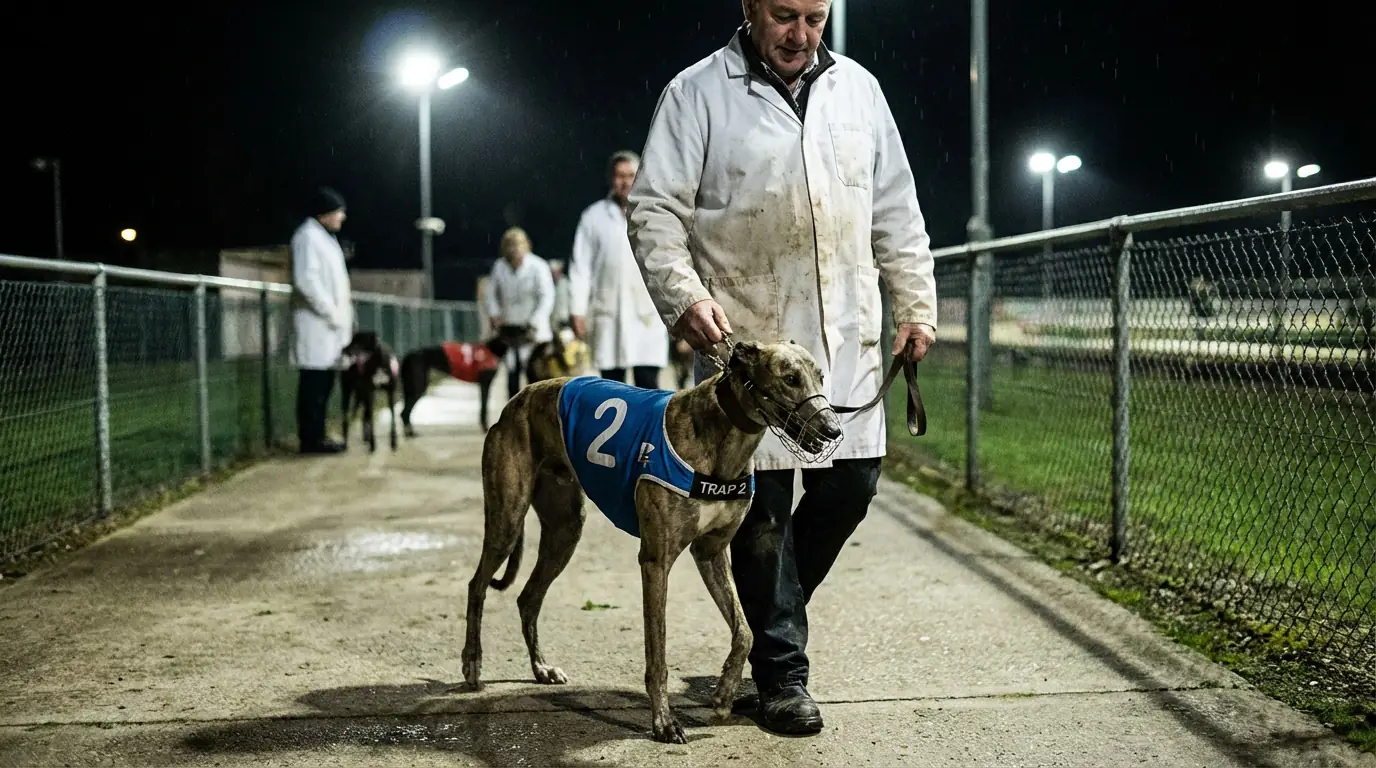
In greyhound racing, the trainer is the most important human variable. There is no jockey to evaluate, no riding instructions to second-guess, no last-minute tactical decisions on the course. The trainer does their work in the days and weeks before the race — selecting the right event, preparing the dog physically, managing its weight, choosing the distance and grade that gives it the best chance. By the time the traps open, the trainer’s job is done. But that job determines more about the outcome than most punters appreciate.
A well-managed dog, placed in the right race at the right time, will outperform a more talented dog that is poorly prepared or badly placed. This is why trainer analysis is not a luxury add-on to your form study — it is a core element. The form figures tell you how a dog has performed. The trainer data helps explain why, and predicts whether that performance is likely to continue, improve, or decline.
The good news is that trainer statistics are publicly available, reasonably easy to access, and highly informative when used correctly. The challenge is knowing which metrics matter and how to interpret them in the context of a specific track and a specific meeting. This guide covers both.
Where to Find Trainer Stats
Trainer statistics are published by several platforms that cover UK greyhound racing. The Racing Post includes trainer records alongside its greyhound racecards and results. Timeform provides trainer analysis as part of its premium service. RPGTV features trainer performance data in its pre-race analysis. And several specialist greyhound data sites aggregate trainer results by track, distance, and time period.
The most useful format for trainer stats is a track-specific breakdown covering the last three to six months. A trainer’s overall career record is interesting but largely irrelevant for betting purposes — what matters is how they are performing now, at the track where tonight’s race is being run. A trainer with a career strike rate of 14% might be running at 22% at Romford over the last quarter, or they might be on a cold streak at 8%. The current figure, not the historical average, is what informs your betting.
Most of these platforms allow you to filter by time period, which is essential. A six-month window balances recency with sample size — long enough to smooth out short-term variance, short enough to reflect current form. A three-month window is more responsive to recent trends but more susceptible to small-sample distortion. Using both — a six-month baseline and a three-month trend — gives you the richest picture of where a trainer’s form is heading.
If your preferred data source does not offer track-specific trainer stats, you can compile your own from the results pages. This takes more time but produces a personalised dataset that exactly matches your needs. Recording the trainer name, track, date, number of runners, and number of winners for each meeting over a rolling period gives you a bespoke strike-rate database that no publicly available tool can replicate. It is manual work, but the informational advantage is genuine.
Key Metrics: Strike Rate, Track Record, and Recent Form
The headline metric for any trainer is strike rate — the percentage of their runners that win. A strike rate of 15% means that roughly one in seven runners wins. That sounds modest until you consider that the random win rate in a six-dog race is 16.7%, and the average trainer strike rate across the sport is typically 12-14%. A trainer consistently running above 16% is outperforming the field average by a meaningful margin.
But strike rate alone is misleading. A trainer who runs only their best dogs at a particular track — entering selectively when the conditions suit — will post a higher strike rate than a trainer who enters a large volume of dogs across all grades and distances. The high strike rate reflects selectivity as much as it reflects training ability. To account for this, check the number of runners alongside the strike rate. A trainer with a 20% strike rate from 50 runners is more reliable than one with 25% from 12 runners, because the larger sample reduces the influence of luck.
Track record is the second crucial metric. Greyhound trainers, like horse racing trainers, develop expertise at specific venues. They learn the surface, the trap biases, the grading system, and the competition. A trainer whose dogs are based near the track and race there weekly has an informational advantage over a trainer who sends dogs from a distance once a month. Checking whether a trainer is a regular at the venue — and whether their track-specific strike rate differs from their overall rate — reveals that local advantage.
Recent form captures momentum. A trainer whose dogs have won three of their last ten runners is showing current competence. A trainer on a losing streak of twenty or more runners might be dealing with kennel issues — illness, surface problems at their gallop, or a batch of dogs between form cycles. The causes are not always visible from the outside, but the results speak clearly enough. Backing dogs from a trainer in current form is not guaranteed to work on any individual race, but over dozens of bets, it aligns your money with the kennels that are producing winners right now.
One metric that is harder to access but valuable when available is place strike rate — the percentage of a trainer’s runners that finish in the top two or top three. A trainer whose dogs win 12% of the time but place 35% of the time is consistently producing competitive runners that finish close to the front. Their dogs might be good each-way propositions even when they are not fancied to win, because the trainer is reliably getting them into contention.
Trainer Patterns That Inform Betting
Beyond the raw statistics, certain trainer behaviours create recurring patterns that informed punters can recognise and exploit.
Grade drops are one of the most powerful signals. When a leading trainer enters a dog in a lower grade than it has recently raced — moving it from A3 to A5, for example — it is a deliberate choice. The trainer believes the dog will be more competitive against weaker opposition, and they are often right. A grade drop from a trainer with a strong track record at the specific venue is one of the strongest positive indicators in greyhound betting. The market recognises this to some extent — the dog’s price will be shorter — but it frequently underprices the advantage, particularly in the lower grades where the market is less attentive.
Distance switches follow a similar logic. A trainer moving a dog from a standard trip to a sprint, or from a flat race to hurdles, is making a decision based on their assessment of the dog’s capabilities. If the trainer has a history of making successful distance switches — their dogs win at a higher rate when changing trip — then the switch itself becomes a positive signal. Not every distance change works, but a trainer with a pattern of successful adjustments is worth following when they make the same move again.
Trainer clusters are another pattern to watch. If a trainer has three or four dogs entered across the same meeting, they have made a deliberate decision to commit their kennel to that night’s card. Check the races carefully: which of those dogs has the most favourable draw, the most suitable grade, and the best recent form? The trainer may have a preferred runner among their entries, and identifying which one is the strongest candidate from the form data gives you a selection advantage.
Finally, watch for trainers who perform well in specific types of races. Some trainers excel at open events, consistently bringing dogs to peak fitness for competition finals. Others have a strong record with puppies, or with staying events, or with hurdle races. These specialisations are visible in the data if you look for them, and they add a layer of analysis that the racecard alone does not provide.
Follow the Trainers Who Know Their Tracks
The most consistently profitable trainer angle in greyhound betting is the simplest: identify the two or three trainers who have the best current record at your specialist track, and give their dogs favourable consideration in your analysis. This does not mean blindly backing everything they run. It means adding trainer form as a weighting factor that adjusts your confidence in a selection upward or downward.
A dog with decent form and a strong draw, trained by someone running at 20% at the venue this quarter, is a better proposition than the same dog trained by someone running at 9%. The dog is the same; the management is different. And in greyhound racing, management is the variable that connects everything else — form, fitness, grade selection, and race timing. The trainer who gets all of those decisions right, consistently, is the trainer whose dogs you want to be backing.
Building a trainer-form habit takes about ten minutes per meeting: check the two or three key trainers at your track, note their recent results, and factor that information into your selections. Over a season, the cumulative effect of this small additional step is one of the most reliable edges available to any greyhound punter.