Greyhound Betting Strategy for Beginners: 7 Proven Approaches
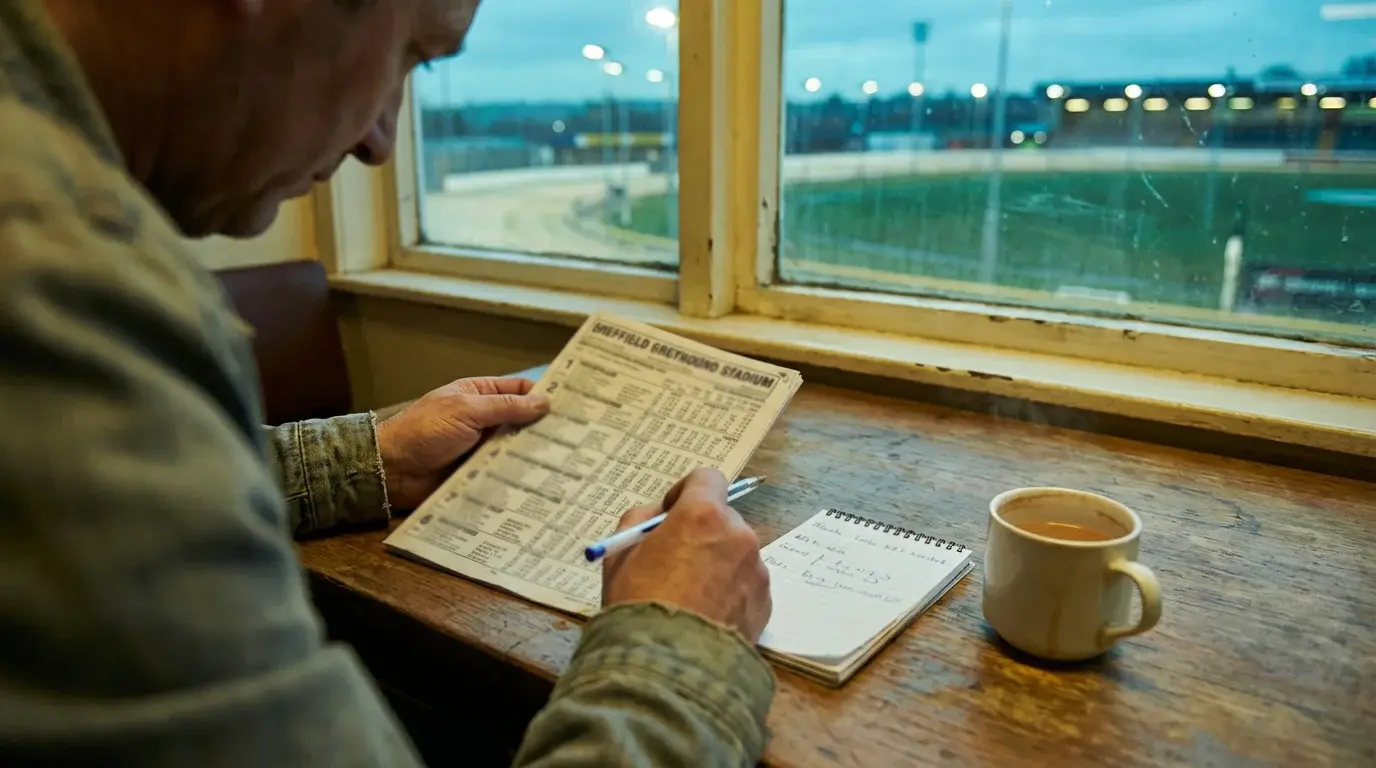
Strategy Before Luck
The first few times you bet on greyhound racing, luck plays a disproportionate role. You pick a name, guess a trap, follow a hunch. Sometimes it works. Sometimes it does not. Either way, you learn nothing — because there was no method behind the bet, and no framework to evaluate what happened afterwards.
Strategy changes that. It replaces randomness with process, hunches with analysis, and hope with a repeatable method you can refine over time. That does not mean strategy guarantees profit. Greyhound racing is unpredictable enough that even the best analysis will produce losing nights. But strategy guarantees something more important: the ability to learn from your results, adjust your approach, and improve. Without it, every bet is an isolated event. With it, every bet is a data point in a larger pattern.
The approaches outlined here are beginner-friendly, which means they do not require expensive software, insider contacts, or years of experience. They require attention, patience, and a willingness to treat greyhound betting as a skill to be developed rather than a gamble to be taken. If that sounds like more work than you expected, it is also the reason most casual punters lose over time — they skip the work.
Focus on One Track First
The single most impactful decision a beginner can make is to specialise. Choose one track and learn it thoroughly before spreading your attention across the entire UK circuit. This sounds limiting, but it is the fastest route to competence in greyhound betting because each track has its own personality — its own dimensions, its own trap biases, its own pool of trainers, its own surface quirks — and understanding these specifics is where analytical edges live.
A punter who knows Romford deeply — who knows that the short run-in favours inside traps, that the 400-metre trip is the bread-and-butter distance, that certain trainers consistently perform well at the venue — has a structural advantage over a generalist who bets across ten tracks with only surface knowledge of each. The specialist sees patterns the generalist misses. They recognise when a dog is running below expectations for track-specific reasons, or when a grading change at their track creates a value opportunity the wider market has not fully priced.
Pick a track based on practical considerations: how often it races (more meetings means more data and more opportunities), whether live streaming is available (so you can watch races remotely), and whether you are interested enough in the venue to sustain attention over weeks and months. Romford, Monmore Green, and Hove are all strong choices because of their racing frequency and data availability. Once you have established genuine competence at one track, expanding to a second is straightforward — you already know what to look for.
The temptation to bet across multiple tracks from the start is strong, especially when your chosen venue has a quiet day and the action is elsewhere. Resist it. Betting on a track you do not know well is not diversification — it is dilution. The edge you are building at your specialist venue does not transfer automatically to other circuits.
Three Beginner-Friendly Approaches
Once you have chosen a track, you need a method for selecting bets. Here are three approaches that beginners can implement immediately, each based on publicly available information and requiring no proprietary tools.
The first is form-and-draw filtering. For each race on the card, look at the last three finishing positions for every dog and cross-reference them with the trap draw. Prioritise dogs with recent top-three finishes that are drawn in a statistically favourable trap for tonight’s distance. This is a simple filter that eliminates the weakest runners and focuses your attention on the dogs most likely to be competitive given the structural conditions of the race. It is not sophisticated, but it imposes discipline — you are making selections based on evidence, not instinct.
The second approach is trainer-form tracking. Trainers, like dogs, go through patches of form. A trainer whose dogs have won three of the last fifteen races at your track is running at a 20% strike rate, which is significantly above average. Tracking trainer form over a rolling four-week window gives you a secondary filter that can confirm or override your initial selections. If your form-and-draw analysis points to a dog whose trainer is currently in strong form at the venue, the case for backing it strengthens. If the trainer has not had a winner in six weeks, the case weakens.
The third approach is race-shape analysis. Before looking at individual dogs, look at the field composition. How many front-runners are there? Are they drawn inside where they can exploit early pace, or outside where they will need to work harder? Is there a lone closer in the field that might benefit from a pace battle up front? This is the most analytical of the three approaches and the one with the steepest learning curve, but it also produces the most distinctive insights. Market prices tend to reflect individual dog form; they are less efficient at pricing the interaction between dogs in a field. Identifying a race where the pace dynamics favour a specific runner — even one that the market considers a second or third choice — is where genuine value opportunities emerge.
None of these approaches works in isolation. The strongest selections are those supported by all three: a dog with good recent form, drawn in a favourable trap, trained by someone in current form, in a race where the pace dynamics suit its running style. When all those factors align, you have a structured case for backing it. When they conflict, you either pass on the race or adjust your stake downward.
A useful exercise for beginners is to paper-trade for your first two weeks. Go through the card, make your selections using one or more of the approaches above, write down your theoretical bets, and then check the results without having risked any money. This gives you a risk-free way to calibrate your method. If your selections are losing consistently, you can adjust before committing real stakes. If they are profitable, you have evidence that your approach has some validity — and that evidence makes it psychologically easier to stick with the method when real money is involved and the inevitable losing runs begin.
The key insight for beginners is that method matters more than brilliance. You do not need to find hidden gems that nobody else has spotted. You need to consistently apply a reasonable analytical framework that filters out poor selections and focuses your attention on the strongest opportunities. Over time, the cumulative effect of disciplined selection outweighs any individual flash of insight.
Bankroll Management for New Punters
Strategy without staking discipline is an engine without brakes. You might identify winning selections, but if your stake sizing is erratic — large bets on uncertain races, small bets on strong selections, or escalating stakes to chase losses — the results will not reflect your analytical ability.
The simplest bankroll system for beginners is level staking: the same amount on every bet, set at a level that allows you to absorb a losing streak without depleting your funds. A reasonable starting point is to set aside a dedicated greyhound betting bankroll — an amount you can afford to lose entirely — and stake no more than 2-3% of that bankroll on any single bet. If your bankroll is 200 pounds, your standard stake is 4 to 6 pounds. This sounds conservative. It is deliberately so. A six-dog field means that even the best dog in a race will lose more often than it wins, and losing runs of ten or fifteen bets are not unusual. A 2% stake survives those runs comfortably; a 10% stake does not.
The discipline of level staking also gives you clean data. When every bet is the same size, your profit or loss at the end of a month reflects your selection ability directly, without being distorted by variable stake sizes. You can see clearly which types of bets are profitable and which are not, and adjust your approach accordingly.
One rule that should be non-negotiable from the start: never increase your stake to recover a loss. Chasing is the single most destructive habit in greyhound betting, and it affects beginners disproportionately because the rapid pace of greyhound meetings — a race every fifteen minutes — creates constant temptation to “make it back” on the next event. A dedicated bankroll and a fixed stake remove the emotional component from the staking decision, which is precisely the point.
Set a session limit as well as a per-bet stake. If you are attending a twelve-race meeting, decide in advance how many races you will bet on and how much you are prepared to lose. If you reach that limit after race six, stop betting and spend the remaining races observing. The information you gather from watching without betting is often more valuable than anything you learn from chasing losses.
Record every bet. This sounds tedious, and it is — at first. But a simple spreadsheet logging the date, track, race, selection, odds, stake, and result gives you data that transforms your understanding of your own betting patterns. After a month, you can see which tracks you perform best at, which bet types are profitable, and which situations consistently lose. Without records, you are relying on memory, which is unreliable and biased toward remembering winners while forgetting losers. With records, you have facts. Facts are the raw material of improvement.
Patience Is the Strategy Nobody Sells
Every betting strategy, including the ones described above, requires time to produce results. Not one night, not one week — months. The sample size needed to evaluate whether your approach is working is larger than most beginners expect, because greyhound betting involves high variance. You can make excellent selections and still lose on a given evening due to factors outside your analysis: a stumble at the traps, an unexpected bump, a freak result.
Patience means trusting the process through losing nights. It means recording your bets, reviewing them honestly, and adjusting your method based on evidence rather than emotion. It means accepting that the majority of the races on any card will not produce a bet that meets your criteria, and that passing on eight of twelve races is a sign of discipline, not timidity.
The greyhound betting market is not designed to reward beginners quickly. It is designed to extract money from those who bet impulsively and return it to those who bet patiently. Placing yourself on the right side of that equation takes time, and the willingness to invest that time is the strategy that separates the punters who improve from those who simply participate.