
Tote Betting on Greyhounds: Pool Bets, Jackpots and Dividends
 Available in US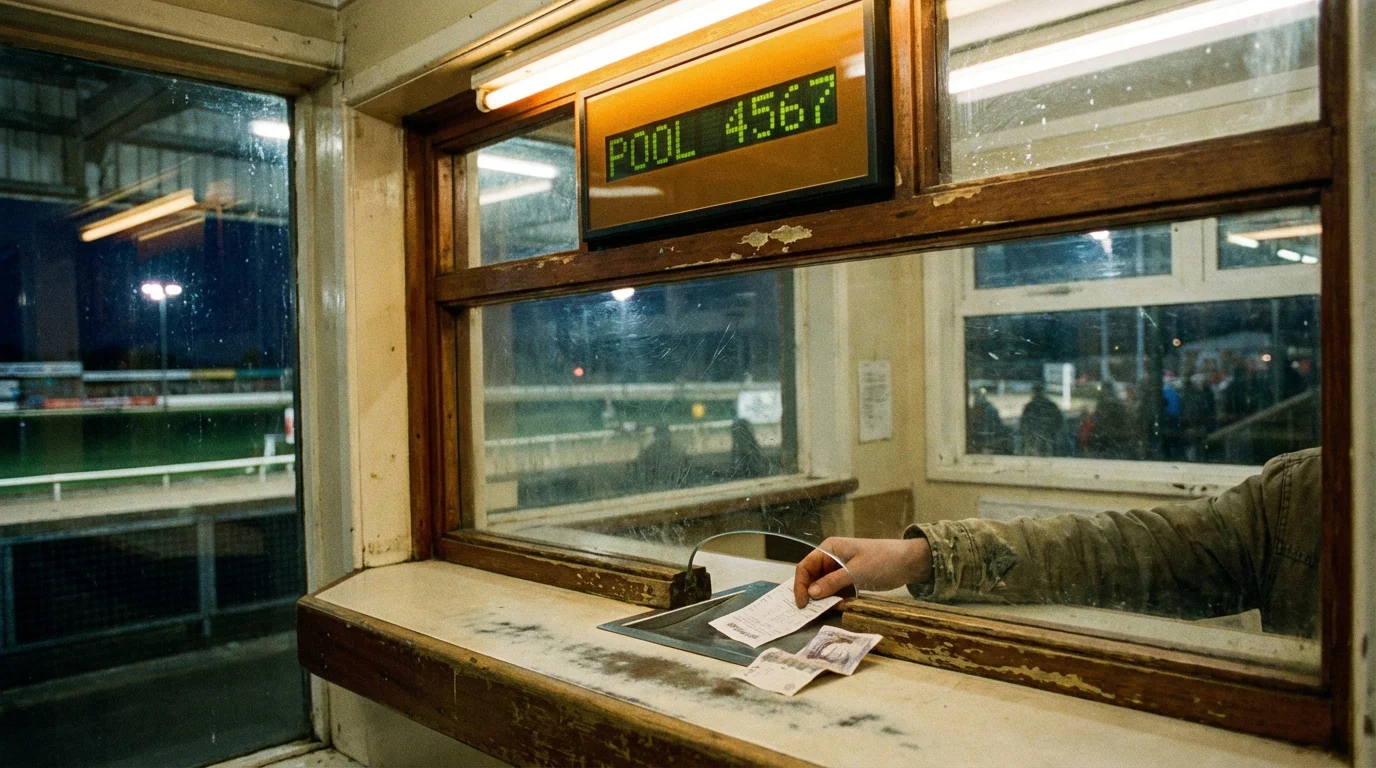
Pool Betting vs Fixed Odds
When you place a bet with a bookmaker, you agree to fixed odds at the point of sale. If the dog wins, the bookmaker pays you at those odds regardless of what happens in the market afterwards. The transaction is between you and the bookmaker, and the price is locked. Pool betting — the system operated by the Tote — works on an entirely different principle. Your stake goes into a communal pool with every other bet on the same race, and the payout is determined by dividing the pool among the winning tickets after a percentage deduction for the operator.
This distinction has practical consequences that shape how you should approach each system. With fixed odds, you know your potential return before the race starts. With the Tote, you do not — the dividend is declared after the race, once the pool has been tallied and the deductions applied. You are betting into uncertainty, which can work for or against you depending on where the rest of the money in the pool has gone.
The Tote has been part of UK greyhound racing since the 1930s, and pool betting windows remain a fixture at every licensed track. On-course, the Tote is often the primary betting mechanism for casual racegoers who prefer the simplicity of picking a dog and feeding a note into the window. Online, Tote pools are accessible through dedicated platforms and some bookmaker integrations. The system is straightforward to use — the complexity lies in understanding when it offers value and when the bookmakers’ fixed odds are the better option.
Find more bet type guides at crayforddogsresults.
How the Tote Pool Works
The mechanics of pool betting are simple in principle. Every stake placed on a particular bet type — win, place, forecast, tricast — goes into a dedicated pool for that race. After the race, the pool is divided by the number of winning units. The operator takes a percentage deduction before the division, and the remaining sum is shared among the winning bets.
The deduction rate varies by bet type. Win pool deductions on greyhound racing typically sit around 15-20%, which means that for every 100 pounds placed into the win pool, 80-85 pounds are paid out to winners. Place pools carry similar deductions. Forecast and tricast pools tend to have higher deductions — 22-26% is common — reflecting the larger individual payouts and the operator’s need to manage liability on exotic bets.
The payout calculation works like this. Suppose the win pool for a race contains 1,000 pounds after deductions. If 200 pounds of that pool was placed on the winning dog, the dividend is 1,000 divided by 200, which equals 5.0 — a decimal odds equivalent. A one-pound bet on the winner returns five pounds. If only 50 pounds was placed on the winner, the dividend rises to 20.0, and a one-pound bet returns twenty pounds. The payout is inversely proportional to the popularity of the selection within the pool.
This is the critical insight for Tote betting: you are not betting against the bookmaker’s opinion of the race. You are betting against the collective opinion of everyone else who placed a bet in the same pool. If the crowd heavily backs one dog and it loses, the pool money is redistributed to the holders of winning tickets on the less popular selections. If the crowd backs the right dog, the payout is modest because the money is spread thinly across many winning tickets.
The practical implication is that Tote dividends are highest when unpopular dogs win. A 10/1 shot in the fixed-odds market might pay 15/1 or more on the Tote if the pool money was concentrated on shorter-priced runners. Conversely, a 2/1 favourite that wins might pay less on the Tote than the bookmaker’s fixed odds, because the majority of the pool was on the favourite and the payout per ticket is diluted. This asymmetry is the foundation of Tote-based strategy: you want to be on the unpopular side of the pool when you win.
Jackpot and Pick Bets on Greyhounds
Beyond the standard win, place, forecast, and tricast pools, the Tote offers jackpot-style bets that require you to pick the winner of multiple consecutive races. These bets carry the potential for substantial payouts because the difficulty of selecting winners across several races is high and the pool money accumulates accordingly.
The most common format is the Pick 6 or similar multi-race pool, where you must select the winner of six nominated races on the card. If nobody selects all six winners, the pool rolls over to the next meeting, creating a growing jackpot that can reach significant sums over the course of a week. When the jackpot is eventually won, the payout can be dramatically larger than anything a single-race bet would produce.
The appeal is obvious: a small stake on a jackpot bet offers an outsized potential return. The reality is equally obvious: hitting six consecutive winners is extraordinarily difficult. Even if each of your selections has a 30% chance of winning — which represents a strong opinion on each race — the compound probability of all six winning is approximately 0.07%. That is roughly one in 1,400 attempts. At a pound per attempt, you would need to spend 1,400 pounds in Tote jackpot bets before expecting one winner, and the payout would need to exceed that figure for the exercise to be profitable.
Permutation betting offers a way to increase your chances at a proportionate increase in cost. Instead of selecting one dog per race, you can select two or three in each leg, covering multiple combinations. A jackpot bet with two selections in each of six races covers 64 combinations (2 to the power of 6), costing 64 pounds at a one-pound unit stake. The hit rate improves, but the cost scales rapidly. Three selections per race gives 729 combinations. The maths quickly moves beyond casual staking territory.
For most punters, jackpot and multi-race Tote bets are best approached as occasional speculative wagers rather than a regular strategy. The entertainment value is high — following your selections through six races creates a narrative tension that a single bet cannot match. But the expected value is typically negative, and the bets should be staked accordingly: small amounts that you can afford to write off, not meaningful portions of your bankroll.
When Tote Dividends Beat Bookmaker Odds
The situations where the Tote pays more than the bookmakers follow a predictable pattern. When a relatively unfancied dog wins — one that the public did not heavily back in the pool — the Tote dividend often exceeds the fixed-odds SP because the pool money was disproportionately concentrated on other runners. This is most common in races with a strong, heavily-backed favourite. The public loads the pool with money on the favourite, and when it loses, the smaller amount of money on the winning outsider generates a generous per-unit dividend.
Conversely, the Tote tends to pay less than the bookmakers when favourites win. The crowd backs the favourite heavily, the pool money on the winner is large, and the per-unit payout is diluted. If you consistently back favourites, the fixed-odds bookmaker will usually offer better value than the Tote. If you consistently back outsiders and longer-priced selections, the Tote may produce higher returns over time.
This makes the Tote particularly interesting for contrarian punters — those who specialise in identifying value at longer odds and are comfortable backing dogs that the majority of the market does not favour. If your analytical approach regularly leads you to selections priced at 5/1 or above, checking the Tote dividend against the bookmaker SP after each race will reveal whether the pool is consistently paying more or less than the fixed-odds market. Many punters who operate at the longer end of the odds spectrum find that the Tote is the more rewarding mechanism for their style of betting.
The comparison works in both directions, and the smart approach is to check both options before committing. On-course, this means comparing the Tote pool indicators with the trackside bookmakers’ prices before placing your bet. Online, it means having access to both a Tote platform and a fixed-odds bookmaker and placing the bet wherever the expected payout is higher. This dual-channel approach adds a few seconds to each betting decision but can improve your average payout over hundreds of bets.
The Tote Rewards Contrarian Thinking
Pool betting is not for everyone. The uncertainty of the payout — not knowing what you will collect until after the race — frustrates punters who prefer the control of fixed odds. The deduction rates mean that the Tote takes a larger slice of the pool than the bookmaker’s margin on most individual bets. And the jackpot bets, while exciting, are long-odds propositions that drain small sums steadily without returning them often enough to justify the outlay.
But for the punter who thinks independently — who looks at a six-dog race and sees value in the dog that the rest of the market is ignoring — the Tote is a natural home. The pool system rewards you for being different. When you back a 10/1 shot that the crowd dismissed and it wins, the Tote pays you more precisely because nobody else shared your opinion. That dynamic is the opposite of fixed-odds betting, where the bookmaker’s margin is applied regardless of how popular your selection is.
Also see our bet types guide.
The Tote will not transform a losing punter into a profitable one. Selection ability still determines your results. But for punters who already have an edge — who consistently find value in longer-priced runners — the Tote provides a mechanism that amplifies that edge rather than constraining it. The crowd is not the enemy in pool betting. The crowd is the opportunity.
