How Greyhound Racing Works: Rules, Traps, Grading and Race Day
 Available in US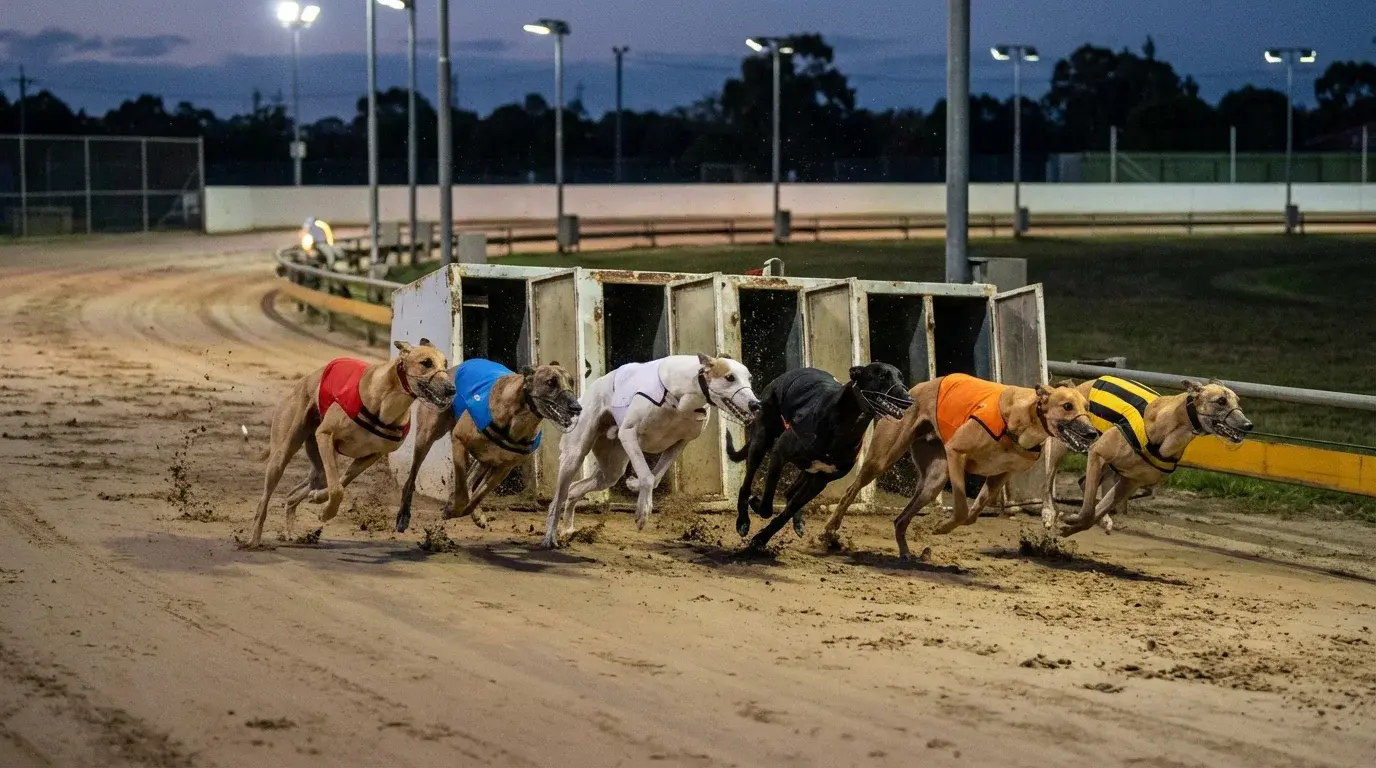
From Kennel to Finish Line
Greyhound racing is, on its surface, one of the simplest sports in existence. Six dogs chase a mechanical hare around an oval track. The first dog past the post wins. The entire event lasts roughly thirty seconds. There are no halves, no timeouts, no substitutions, and no weather delays. The hare starts, the traps open, and the race is over before you have finished your drink.
That simplicity is deceptive. Behind the thirty seconds of racing lies a structure of breeding, training, grading, veterinary regulation, and race management that determines which dogs run, where they run, and against whom. Understanding that structure — even at a basic level — transforms greyhound racing from a confusing blur of coloured jackets into a sport you can read, analyse, and, if you choose, bet on with some degree of informed judgement.
This guide covers the fundamentals: how a race is set up, what the rules are, how dogs are graded and matched, and what a typical evening at the track looks like. None of it is complicated. All of it is useful.
Find more racing guides at crayforddogsresults.
The Race Structure: Traps, Hare, Bends, and Finish
Every greyhound race in the UK follows the same basic structure. Six dogs are loaded into starting traps — numbered one through six, with each trap assigned a specific jacket colour. Trap one is red, trap two is blue, trap three is white, trap four is black, trap five is orange, and trap six wears black and white stripes. These colours are universal across every UK track and never change, which makes it possible to follow the action even from a distance.
The traps are positioned at the start of the race, and the mechanical hare — usually an outside Swaffham type at most UK tracks — begins its circuit ahead of the dogs. When the hare reaches the correct point, the traps open simultaneously and the dogs break. The release is triggered by the hare’s position, not by a human starter, which ensures consistency.
The track is an oval, and races are measured in metres. The number of bends depends on the distance: a sprint over 225 metres might involve only two bends, while a middle-distance race over 575 metres covers six. The first bend is the most critical phase of any race — it is where dogs jostle for position, where traffic problems occur, and where the race is often effectively decided. Dogs that reach the first bend in front, with a clear run on the inside rail, have a significant structural advantage for the remainder of the race.
The finish is determined by the order in which dogs cross the line. Photo finishes are used when the result is too close to call with the naked eye, and official times are recorded to hundredths of a second. After the race, each dog is returned to its handler, and the official result is declared. The entire sequence — from hare start to result declaration — takes under two minutes.
If a dog is withdrawn before the race — due to injury, illness, or a failed pre-race veterinary check — a reserve runner may be substituted. The reserve wears a distinctive striped jacket and is drawn from a pool of dogs on standby. When a withdrawal occurs after betting has opened, Rule 4 deductions may apply to adjust payouts, as the removal of one dog changes the competitive dynamics of the race.
The races themselves are categorised by type. Graded races, which make up the majority of any meeting, group dogs of similar ability together based on their recent times. Open races attract the best dogs regardless of grade and typically carry the highest prize money. Handicap races give slower dogs a head start over faster ones, with staggered starting positions designed to equalise the field. Hurdle races add low obstacles on the straights, introducing a jumping element that changes the form analysis entirely. Each type appears on the racecard with a code that tells you what kind of event you are looking at before you study the runners.
One detail that beginners often overlook is the race distance indicator on the card. The same track will host races at multiple distances during a single meeting — a 225-metre sprint, followed by a 400-metre graded race, followed by a 575-metre middle distance event. The distance changes the competitive dynamic, the relevant form, and the importance of the trap draw. Checking the distance before studying the runners is a basic step that prevents the common mistake of comparing form across incompatible trips.
GBGB Rules and Regulations
Licensed greyhound racing in the UK operates under the authority of the Greyhound Board of Great Britain, known as the GBGB. This body sets the rules for racing, licenses tracks and trainers, oversees veterinary standards, and manages the grading system that determines which dogs race against each other.
The grading system is central to how greyhound racing works. Dogs are assigned a grade — from A1 at the top to A11 or A12 at the bottom, depending on the track — based on their recent racing times. A dog that runs fast times is graded higher and competes against other fast dogs. A dog that slows down, or is new to a track, starts in a lower grade and works its way up. The system aims to produce competitive fields where the dogs in each race are broadly similar in ability, which is better for the sport and better for the betting market.
Grading is track-specific. A dog graded A3 at Romford might be graded A5 at Monmore because the time standards and competitive depth differ between venues. When a dog transfers from one track to another, it is re-graded according to the new track’s standards. This is worth noting for bettors, because a dog arriving from another venue may be over-graded or under-graded relative to the local competition, and the adjustment period can create value opportunities.
The GBGB also governs drug testing, veterinary inspections, and welfare standards. Every dog that races under GBGB rules is subject to random testing, and trainers are responsible for the condition and welfare of the animals in their care. Pre-race veterinary checks are mandatory — each dog is examined by an on-duty vet before being cleared to race. If a vet is not satisfied that a dog is fit to compete, it is withdrawn. These regulations exist to protect the dogs and to maintain the integrity of the racing and betting product.
Independent tracks — those not licensed by the GBGB — also operate in the UK, typically at a lower level. These venues run under their own rules, and the racing is not covered by the same regulatory framework. For betting purposes, GBGB-licensed meetings are the standard: they are the races covered by bookmakers, broadcast by SIS and Sky Sports Racing, and subject to the drug testing and grading systems that give the form data its reliability.
The regulatory structure extends to the betting side. All legal greyhound betting in the UK takes place through operators licensed by the UK Gambling Commission. The UKGC oversees the bookmakers; the GBGB oversees the racing. Together, they create a framework that ensures the sport is run fairly and the betting market operates transparently. For the punter, this means that the results are trustworthy, the form data is accurate, and the prices offered by licensed bookmakers are subject to regulatory scrutiny. It is a system with imperfections, but it is substantively more reliable than unregulated racing.
A Typical Race Night: What to Expect
A standard evening meeting at a UK greyhound track runs to twelve races, with approximately fifteen minutes between each. Doors typically open around 6.30pm, and the first race is usually between 7pm and 8pm, depending on the venue. The final race is over by 10pm or shortly after, making a greyhound meeting one of the most time-efficient sporting events you can attend.
The racecard is your guide for the evening. Published online and available in printed form at the track, it lists every dog in every race along with their form, best times, recent finishing positions, trainer, weight, and grade. Studying the card before the meeting — ideally the evening before or the morning of — gives you time to form opinions without the pressure of the live betting window.
Betting is available on-course through Tote windows and track bookmakers, and remotely through online accounts. Most punters arrive with their selections already made, check the early prices on the screens, and place bets in the minutes before each race. The atmosphere varies by venue and by night — Saturday evenings at a well-attended track have a genuine buzz, while a Monday afternoon BAGS meeting is a quieter, more workmanlike affair.
Between races, the dogs for the next event are paraded in front of the grandstand, giving spectators a chance to assess their physical condition — weight, muscle tone, demeanour. Experienced trackgoers pay attention to the parade, looking for dogs that appear relaxed and fit versus those that seem agitated or dull. This is an imprecise art, but it is one of the few informational edges that attending in person provides over remote viewing.
After each race, the official result is displayed on the screens alongside the starting prices, Tote dividends, and official race time. Winning bets can be collected at the Tote windows or are settled automatically on online accounts. The cycle repeats every fifteen minutes, and by the end of the evening you will have seen twelve races and had twelve opportunities to test your judgement against the market.
One practical note for first-time visitors: you do not need to bet on every race. In fact, the more experienced the punter, the fewer races they tend to bet on. Watching a race without money on it is one of the best ways to learn how the track rides, how the dogs handle the bends, and how the pace of a race develops from trap to finish. Treat your first few visits as observation sessions with a small staking allowance, and resist the temptation to bet every event simply because the opportunity exists. The racecard will still be there next week. The bankroll might not be, if you treat every race as a must-bet.
Simple Sport, Complex Betting
The paradox of greyhound racing is that the sport itself is almost childishly simple — six dogs run and one wins — but the betting market built around it is as nuanced and challenging as any in professional gambling. The grading system, the trap draw, the form data, the sectional times, the trainer patterns, the track-specific biases, the weather, the surface conditions — all of these variables interact to produce outcomes that are unpredictable on any individual race but patterned across large samples.
That pattern recognition is where the serious punter operates. You are not trying to predict the winner of every race. You are trying to identify the races where your analysis gives you an edge over the market’s opinion, and to bet selectively on those opportunities. The simplicity of the sport means the data is accessible. The complexity of the betting means the data is worth studying.
Also read our racing grades explained.
Whether you attend a track on a Saturday night or watch the afternoon BAGS from your phone, the fundamentals are the same: six dogs, one hare, an oval track, and thirty seconds of racing. Everything else — the grading, the form, the odds, the strategy — is what you bring to it. The more you understand about how the sport works, the better equipped you are to make that thirty seconds count.
